




































































































































































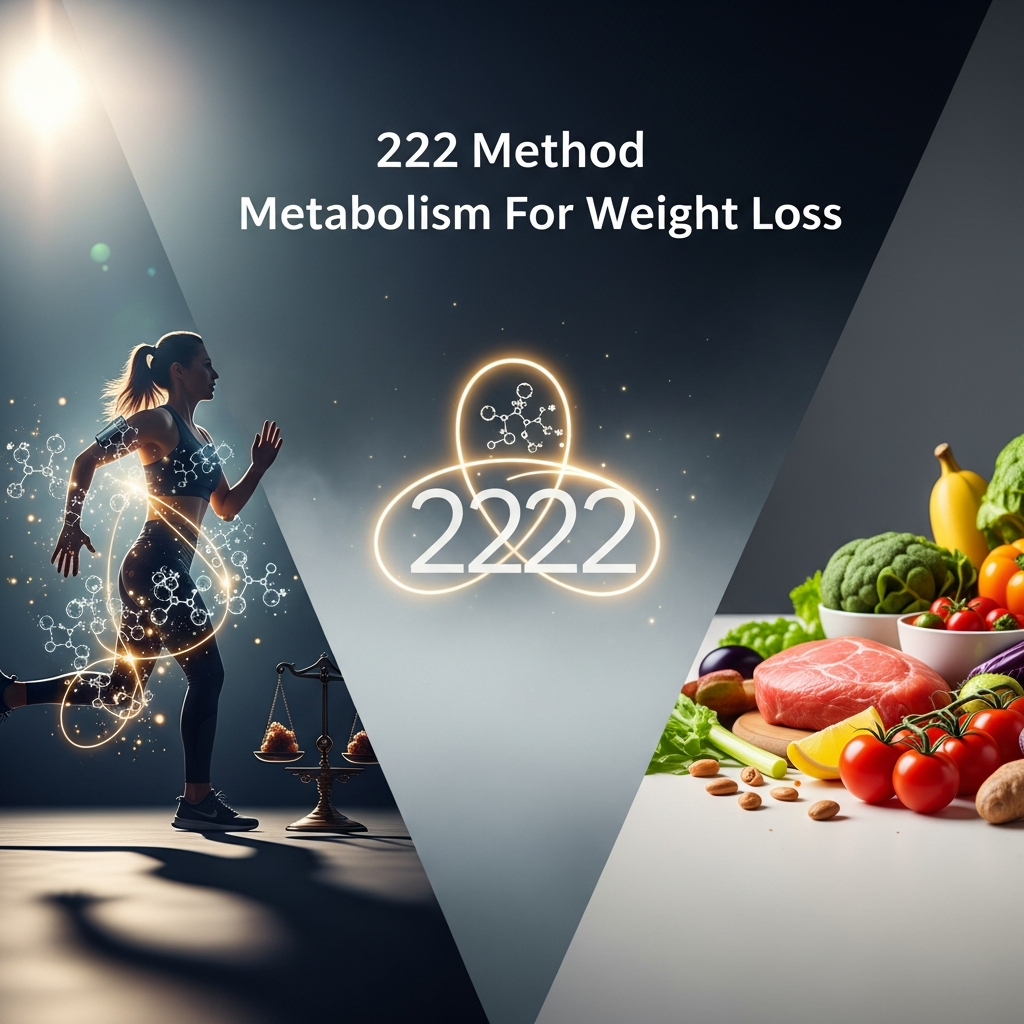
222 Method Metabolism for Weight Loss
Author: RVLNSV PRASAD
Updated On: August 2026
Author Note
This article was written by RVLNSV PRASAD to provide easy-to-understand information about the 2-2-2 approach, metabolism, weight management, nutrition, physical activity, and healthy lifestyle habits. The content is intended for general education and does not claim that the 2-2-2 method is a medically proven weight-loss treatment.
Introduction
222 Method Metabolism is becoming a popular approach for people who want to lose weight in a healthy and realistic way.
Many people struggle with what they believe is a slow metabolism, often feeling tired or finding it difficult to manage their weight. Diets can fail repeatedly, which can be frustrating and discouraging.
I understand this struggle because I have seen it among friends and clients, and I have also experienced challenges with weight management personally. The problem is not always a lack of effort; sometimes, people may need a clearer understanding of their nutrition, activity, and overall lifestyle.
The 222 Method Metabolism approach tries to solve that problem.
This guide explores the 2-2-2 method for metabolism and weight loss, including how the approach is structured and what people may experience when trying it. NIDDK—Choosing a Safe & Successful Weight-Loss Program
What Is the 222 Method Metabolism?
The 2-2-2 method for weight loss and metabolism is described as a structured daily routine intended to encourage consistent eating, movement, and lifestyle habits. The concept is relatively simple, with the number “222” representing three parts of a daily routine that are intended to support healthy lifestyle habits.
The approach may be described using habits such as
- Structured meal timing
- Balanced physical activity
- Consistent sleep patterns
- Two meals emphasizing protein and nutrient-rich foods
- Two forms of daily movement
Different coaches may explain the method differently, but the broader idea is to create a consistent daily routine around eating, movement, and recovery. The method should not be presented as a proven way to “boost” or reset metabolism without stronger scientific evidence.
Why Metabolism Matters for Weight Loss
Your metabolism plays an important role in how your body uses energy, but body weight is influenced by many factors, including food intake, physical activity, sleep, genetics, and overall health. A lower energy expenditure does not automatically cause weight gain, and the following factors can have multiple causes.
Factors that may affect weight management include:
- Changes in energy intake and activity levels
- Fatigue or low energy
- Food cravings
- Changes in body composition
- Sleep and stress
- Individual metabolic differences
Very restrictive diets can also be difficult to maintain and may lead to inadequate nutrition or loss of lean tissue. Rather than relying on extreme approaches, the 2-2-2 method for weight loss is presented as a structured routine that emphasizes consistency and lifestyle habits. However, it should not be described as a scientifically proven way to “reset” or dramatically speed up metabolism.
The Science Behind the 2-2-2 Method for Weight Loss
Metabolism is influenced by several factors, and understanding them can help explain how daily habits may affect energy use and weight management.
These factors include:
- Muscle mass
- Hormones
- Sleep
- Food quality
- Meal timing
- Physical activity
The 2-2-2 method for weight loss is presented as a structured routine that focuses on several of these lifestyle factors. However, the method itself should not be described as a scientifically proven way to increase metabolic rate or accelerate fat burning.
For example:
- Regular eating patterns can help some people maintain consistent eating habits.
- Physical activity can increase energy expenditure and support muscle health.
- Adequate sleep supports overall health and may influence appetite and weight-management behaviors.
- Consistent daily routines can make healthy eating and activity habits easier to maintain.
These principles provide a general foundation for understanding the lifestyle ideas associated with the 2-2-2 method for metabolism and weight loss, although more research is needed to determine whether the specific method offers unique metabolic benefits.
How the 2-2-2 Method for Weight Loss Works
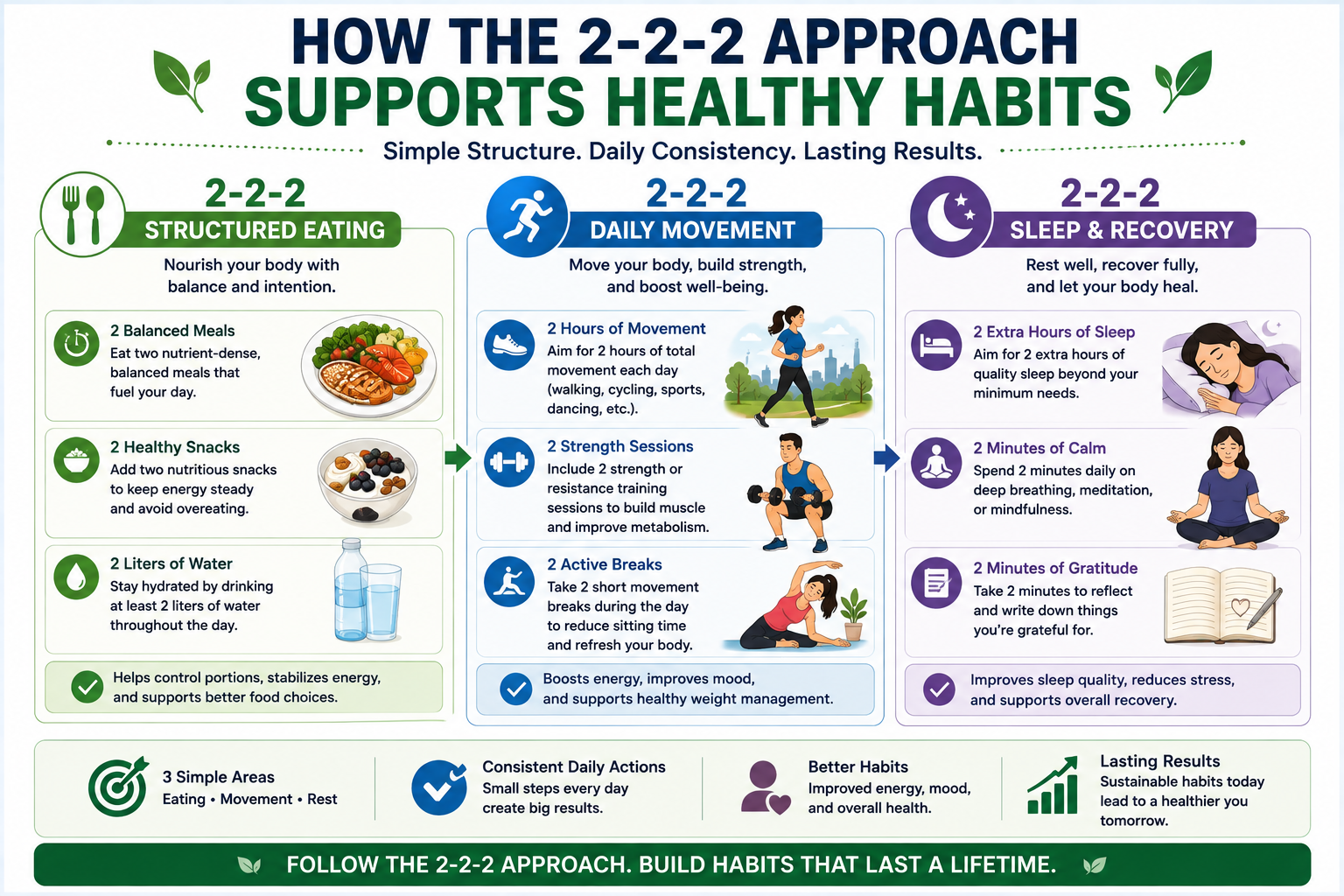
The 2-2-2 method for weight loss is described as a structured routine built around consistent daily habits. Rather than relying on extreme dietary restrictions, the approach emphasizes three main pillars designed to encourage regular eating patterns, physical activity, and healthy lifestyle behaviors.
The three main pillars include
These pillars support fat burning naturally.
1. Structured Eating for the 2-2-2 Weight Loss Method
Eating at consistent, predictable times can help create a regular eating routine and may make it easier to manage hunger and energy throughout the day. Skipping meals does not work well for everyone and may leave some people feeling excessively hungry later. The 2-2-2 weight loss method emphasizes structured, balanced meals rather than extreme food restriction.
Meals can include:
- Protein-rich foods
- Healthy fats
- Fiber-rich foods
- High-quality carbohydrate sources
Together, these foods can provide important nutrients and help support fullness, energy, and overall dietary balance.
2. Daily Movement for the 2-2-2 Weight Loss Method
3. Sleep and Recovery for Sustainable Weight Management
Sleep is often overlooked when people focus on weight loss, but getting enough quality sleep is an important part of overall health and healthy weight management. Poor sleep may affect appetite, food cravings, energy levels, and eating behaviors the following day.
The 2-2-2 approach to weight management encourages consistent sleep and recovery habits as part of a balanced lifestyle. Rather than viewing sleep as a way to “repair” or dramatically increase metabolism, it is more accurate to recognize that adequate sleep supports physical recovery, daily energy, and healthy routines.
Helpful recovery habits include:
- Maintaining a consistent sleep schedule
- Getting adequate sleep each night
- Creating a relaxing bedtime routine
- Allowing your body enough time to recover from physical activity
- Managing stress and avoiding excessive late-night eating
My Personal Experience With Sustainable Weight Management
I once followed a strict low-calorie diet and ate only about 1,200 calories a day. At first, my weight dropped quickly, but the progress eventually slowed, and I experienced lower energy, stronger cravings, and changes in mood. The experience was difficult and taught me that very restrictive eating can be challenging to maintain.
Later, I focused more on balanced meals, regular movement, and sustainable habits. My progress became slower but more consistent, and I felt better overall. This personal experience helped me appreciate the broader principles behind sustainable weight management, including balance, consistency, adequate nutrition, and realistic lifestyle changes. It also reinforced the idea that long-term weight management is more practical than relying on extreme short-term restrictions.
A Realistic Example of Sustainable Weight Management
If you include a personal or reader story in this section, it should be clearly identified as a personal experience or anecdotal example rather than presented as scientific evidence. Individual results from a weight-loss approach cannot be guaranteed, and a single story cannot establish that the 2-2-2 method caused a particular amount of weight loss.
For example, consider a hypothetical person who had struggled with weight management after trying several restrictive approaches, including keto, juice cleanses, and low-fat plans. Instead of repeatedly switching between extreme diets, she focused on consistent lifestyle habits and a balanced eating pattern.
Her routine might include:
- A 20-minute morning walk
- A protein-rich breakfast
- A balanced lunch and dinner
- Short movement breaks during the day
- Strength training twice a week
- A consistent sleep schedule
- Reasonable portions and fewer highly processed foods
Rather than promising a specific result such as losing 68 pounds, the more useful lesson is that sustainable weight-loss habits can be built around realistic changes that a person can maintain over time. Weight loss and maintenance vary considerably between individuals, and improvements should be evaluated based on personal progress, health, and long-term adherence.
This example illustrates the broader principle behind the 2-2-2 lifestyle approach: consistency, balanced nutrition, regular physical activity, and adequate recovery may be more practical than relying on extreme short-term diets.
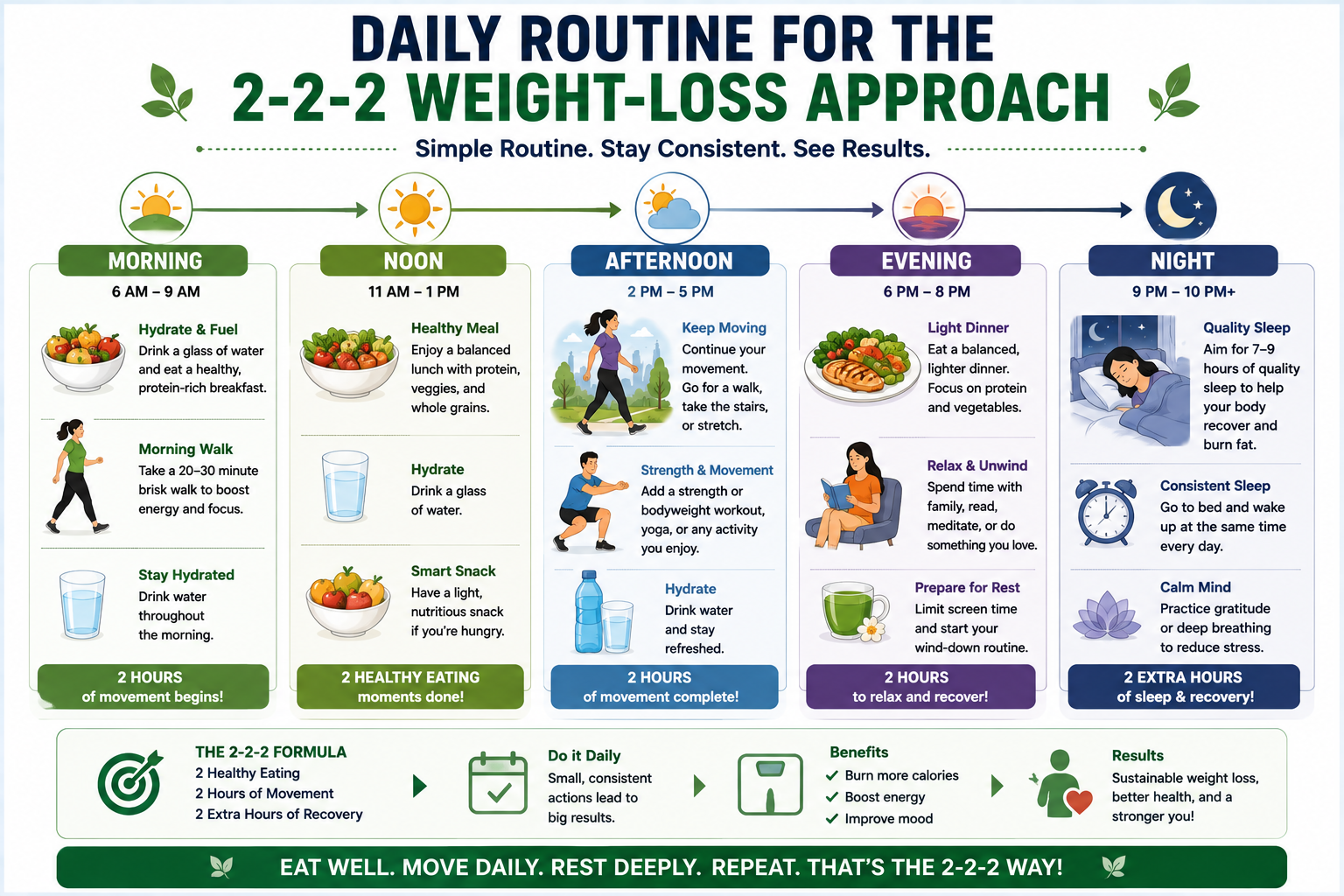
A Simple Daily Routine for the 2-2-2 Weight-Loss Approach
A consistent daily routine can make healthy eating, physical activity, and recovery easier to maintain. Rather than treating the 2-2-2 method as a proven way to change metabolism, it is more appropriate to view it as a structured lifestyle approach that can encourage regular habits.
A simple routine might look like this:
Morning
- Drink water according to your thirst and daily needs.
- Do some light movement, such as walking or gentle mobility exercises.
- Have a balanced, protein-rich breakfast if breakfast fits your eating pattern.
Around Noon
- Choose a balanced lunch that includes protein, vegetables, and a suitable source of carbohydrates or healthy fats.
- Take a short walk or include another form of light physical activity if practical.
Afternoon
- Have a nutritious snack if you are genuinely hungry or if it fits your daily eating plan.
- Take brief movement breaks instead of remaining seated for long periods.
Evening
- Choose a balanced dinner based on your nutritional needs and preferences.
- Consider gentle stretching or another relaxing activity.
Night
- Follow a reasonably consistent bedtime and wake-up schedule.
- Allow enough time for adequate sleep and recovery.
The goal is not to follow every step perfectly. Consistent daily habits are more practical than extreme restrictions or exhausting workouts. This routine reflects the broader lifestyle principles often associated with the 2-2-2 approach, but it should not be presented as a scientifically proven method for “resetting” metabolism or guaranteeing weight loss.
Foods That Support Healthy Metabolism
Food quality can play an important role in overall nutrition and weight management. Rather than relying on a specific “metabolism-boosting” food, the 2-2-2 eating approach can be described as emphasizing a balanced pattern that includes nutrient-rich whole and minimally processed foods.
Examples of nutritious foods include:
- Eggs and other protein-rich foods
- Chicken and fish
- Greek yogurt
- Vegetables
- Whole grains
- Beans and lentils
- Nuts and seeds
These foods can provide protein, fiber, healthy fats, vitamins, minerals, and other important nutrients. Including a variety of these foods in balanced meals can support fullness, energy, and overall metabolic health. NIDDK — Healthy Eating & Physical Activity for Life
Movement and Physical Activity for Weight Management
Regular physical activity can support energy expenditure, muscle health, physical fitness, and long-term weight management. Strength training can help maintain or build muscle, while walking and other forms of movement can increase daily energy expenditure.
The 2-2-2 activity approach emphasizes simple forms of movement that can be incorporated into everyday life rather than relying on exhausting workouts.
Three practical forms of activity include
- Walking: A simple way to increase daily physical activity.
- Strength training: Helps build or maintain muscle and improve strength.
- Daily movement: Activities such as household tasks, taking the stairs, or taking short movement breaks can reduce prolonged periods of sitting.
The amount of activity needed varies from person to person. Even short periods of movement can contribute to your overall daily activity, while regular exercise can provide broader health benefits.
Stress and Metabolic Health
Stress can affect eating habits, sleep, activity levels, and overall health. High or prolonged stress may also influence hormones such as cortisol, which can affect appetite and weight management.
Helpful stress-management practices include:
- Meditation
- Breathing exercises
- Walking outdoors
- Maintaining good sleep habits
These simple practices can complement the 2-2-2 approach to weight management by supporting healthier daily routines. NIDDK — Factors Affecting Weight & Health
Srength Training for Muscle and Metabolic Health
Personal Insight on Sustainable Weight Loss
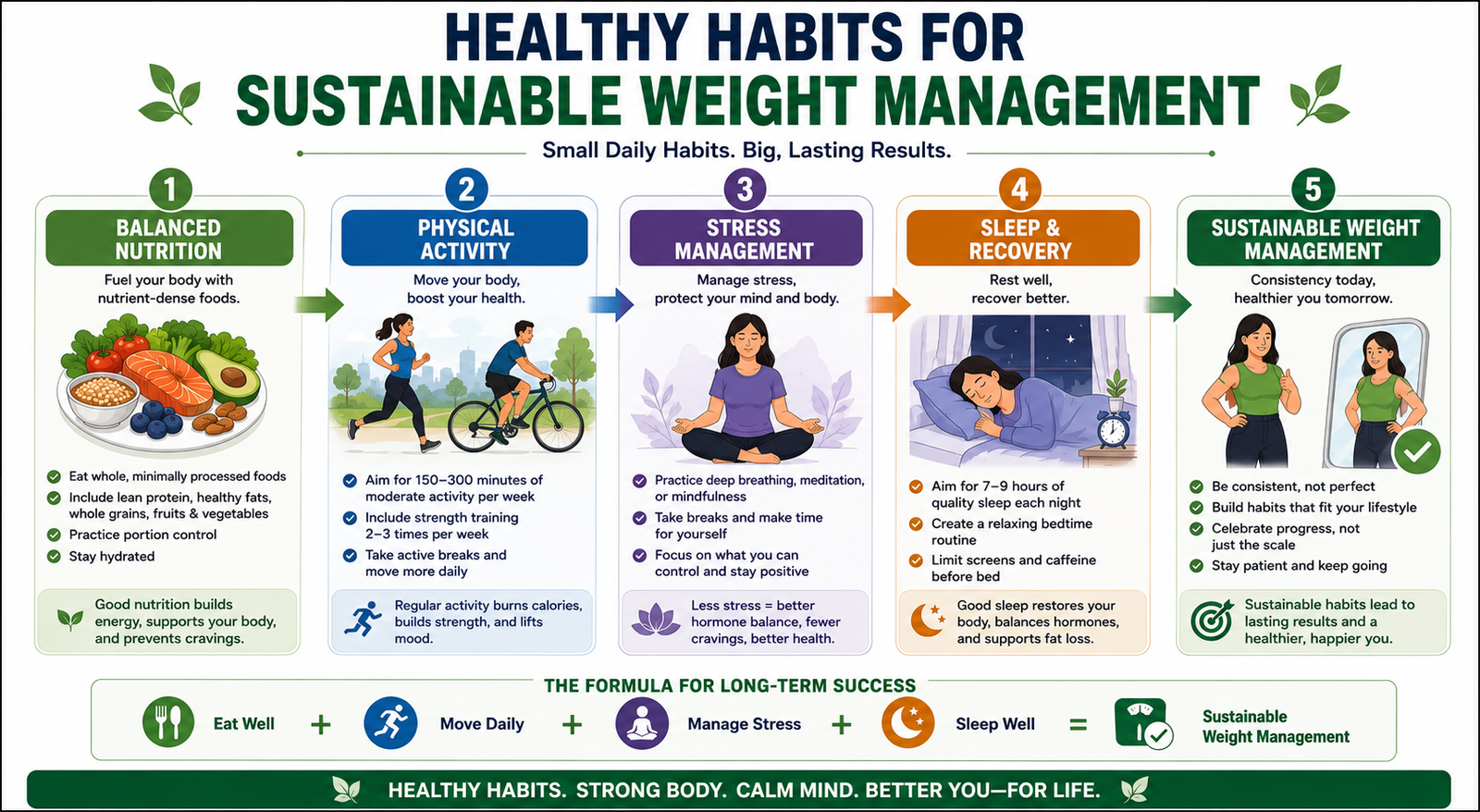
In my opinion, one of the biggest mistakes people make is focusing too much on fast results. Wanting to lose 20 pounds in one month can lead to overly restrictive approaches that are difficult to maintain.
Gradual progress can be more sustainable because it allows time to build healthier habits. The 2-2-2 approach to sustainable weight management can complement this mindset by emphasizing consistency and practical daily routines.
Key principles include:
- Focus on gradual progress
- Build sustainable habits
- Stay consistent rather than seeking perfection
- Choose practical steps over extreme plans
Benefits of the 2-2-2 Approach for Weight Management
Common Mistakes When Trying the 2-2-2 Weight-Loss Approach
Some people may misunderstand the principles of a structured weight-management routine and make changes that are too restrictive or difficult to maintain. Common mistakes can include:
- Skipping meals unnecessarily
- Exercising excessively without adequate recovery
- Ignoring sleep and rest
- Consuming too few calories or nutrients
- Expecting rapid results
These habits can make a weight-management plan harder to sustain and may negatively affect energy, recovery, and overall well-being. The 2-2-2 weight-loss approach is better presented as a focus on balanced, consistent habits rather than extreme restriction.
Frequently Asked Questions
1. What is the 222 Method Metabolism?
The 222 Method Metabolism is described as a structured lifestyle approach that combines eating habits, physical activity, and recovery. The exact details can vary between sources, so it should not be treated as a standardized or medically proven program.
2. Can the 2-2-2 method help with weight loss?
The approach may help some people establish more consistent eating and activity habits. However, there is not enough evidence to conclude that the method itself directly increases metabolism or guarantees weight loss. Individual results depend on factors such as food intake, activity, sleep, health, and long-term adherence.
3. How quickly can you lose weight with this approach?
Weight-loss results vary considerably from person to person. The amount and rate of weight loss can depend on starting weight, calorie intake, physical activity, health conditions, medications, and other lifestyle factors. A gradual, sustainable approach is generally more practical than pursuing rapid weight loss.
4. Is exercise required for this weight-management approach?
Physical activity can be an important part of a healthy weight-management plan, but exercise does not need to be extreme. Walking, strength training, and other activities that fit your fitness level can contribute to overall health and daily energy expenditure.
5. Can beginners try this lifestyle approach?
Beginners may be able to incorporate its general principles, such as balanced meals, regular movement, and adequate recovery. Start gradually and choose activities and eating habits that are appropriate for your individual needs.
6. Is the 2-2-2 approach safe for everyone?
There is no single version of the approach that can be considered universally safe for everyone. People with medical conditions, those taking medications, pregnant or breastfeeding individuals, or anyone planning substantial dietary changes should consult a qualified healthcare professional before making major changes.
7. Who may benefit from a structured weight-management routine?
People who prefer a clear daily routine may find structured eating, regular physical activity, and consistent sleep habits useful. However, having a “slow metabolism” should not automatically be assumed to be the reason for difficulty losing weight. Weight management is influenced by many factors, and persistent concerns should be discussed with a healthcare professional.
Final Thoughts
The 222 Method Metabolism is presented as a balanced and practical approach to supporting metabolic health and weight management. It emphasizes consistent routines, nutritious foods, regular movement, and adequate recovery rather than extreme dieting. The broader lesson is that everyday habits can influence energy levels, eating patterns, physical activity, and overall health. By following sustainable lifestyle principles, people may gradually improve their fitness and weight-management habits. Slow, consistent changes can be more practical to maintain, and small habits may have meaningful effects when continued over time. You Also Read These Articles
Medical Disclaimer
This article is for general educational purposes only and is not a substitute for medical advice, diagnosis, treatment, or individualized nutrition guidance. If you have a medical condition, take medications, are pregnant or breastfeeding, or plan to make major changes to your diet or exercise routine, consult a qualified healthcare professional before starting.
- 12 Best Fat Burning Supplements Women
- Best 8 Weight Loss Exercises
- 6 12 25 Workouts: The Muscle-Building Secret Behind This Brutal Hypertrophy Method
- 8 Metabolic Mastery: Unlocking the Secrets to Sustainable Weight Loss
- 13 Best Ways To Boost Metabolism With Exercise
- Home












[…] 222 Method Metabolism For Weight Loss […]
[…] 222 Method Metabolism For Weight Loss […]
[…] 222 Method Metabolism For Weight Loss […]
[…] 222 Method Metabolism For Weight Loss […]
[…] 222 Method Metabolism For Weight Loss […]
[…] 222 Method Metabolism For Weight Loss […]
[…] 222 Method Metabolism For Weight Loss […]
[…] 222 Method Metabolism For Weight Loss […]
[…] 222 Method Metabolism For Weight Loss […]
[…] 222 Method Metabolism For Weight Loss […]
[…] 222 Method Metabolism For Weight Loss […]
[…] 222 Method Metabolism For Weight Loss […]
[…] 222 Method Metabolism For Weight Loss […]
[…] 222 Method Metabolism For Weight Loss […]
[…] 222 Method Metabolism For Weight Loss […]
[…] 222 Method Metabolism For Weight Loss […]
[…] 222 Method Metabolism For Weight Loss […]
[…] 222 Method Metabolism For Weight Loss […]
[…] 222 Method Metabolism For Weight Loss […]
[…] 222 Method Metabolism For Weight Loss […]
[…] 222 Method Metabolism For Weight Loss […]
[…] 222 Method Metabolism For Weight Loss […]
[…] 222 Method Metabolism For Weight Loss […]
[…] 222 Method Metabolism For Weight Loss […]
[…] 222 Method Metabolism For Weight Loss […]